


Mercari Japan: Anime Shopping
4.135.00 Reviews
App Specs
- Version
- 1.60.0
- Updated On
- License
- Free
- Downloads
- 500,000+
- Developer
- Mercari, Inc
- Categories
- Shopping
- Platform
- Android
Screenshots
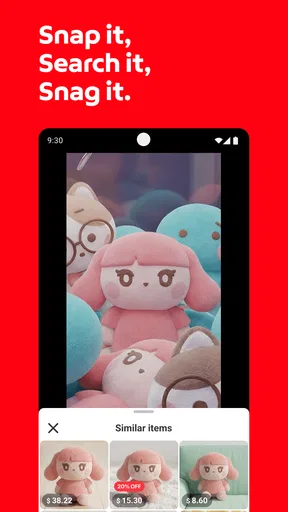
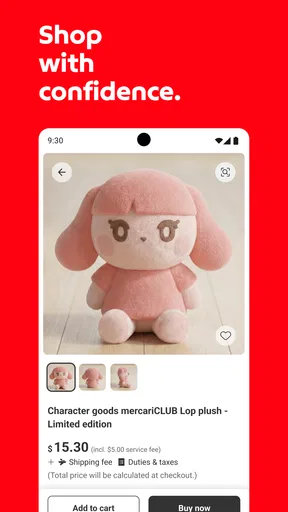
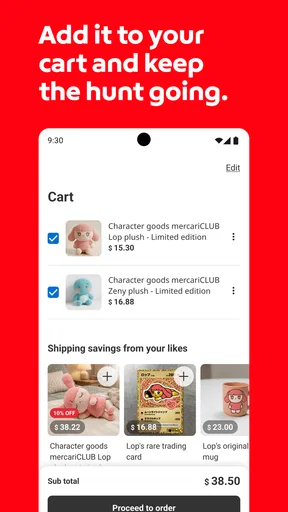
 Analysis by AppCompare
I approached Mercari Japan: Anime Shopping as a specialist marketplace rather than a general shopping app. Its focus is collecting: anime goods, idol merchandise, trading cards, and other items that are often difficult to find outside Japan. That narrow purpose is exactly what makes it interesting. If I am looking for a particular character item or an older collectible, a normal retail app may offer very little, while this marketplace can feel much closer to the source.
The app is developed by Mercari, Inc and is free to install. It belongs to the shopping category, carries a Mature 17+ content rating, and has reached over 500 thousand installs. Its average score is 4.1 from around 2 thousand ratings, which suggests a generally positive experience with enough room for the usual marketplace frustrations. I would not treat it as a casual browsing app for everyone, but for collectors, fans of Japanese pop culture, and people who enjoy hunting for unusual merchandise, it has a clear reason to exist.
How I use Mercari Japan for a practical collecting routine
My basic workflow starts with a very specific search rather than a broad phrase. Searching for a series name alone can produce a crowded result page, so I narrow the wording with the character, item type, and sometimes the Japanese spelling. This matters especially for trading cards and idol goods, where sellers may use abbreviated names or Japanese terms that do not appear in an English-language search.
Once I find a promising result, I read the title and description together instead of trusting the thumbnail. A photo may show several pieces while the listing concerns only one of them, or the item may be a bonus, duplicate, incomplete set, or a different version of the pictured product. I also check the seller’s photos carefully for condition clues. On a collectible marketplace, small marks, bent corners, missing packaging, or signs of previous display can change whether an item is worth pursuing.
The most useful habit is to separate “I want this” from “this is a sensible purchase.” I save promising searches mentally by their exact wording and compare similar listings before deciding. A rare-looking card is not automatically a good deal if another listing includes better condition or more complete contents. Likewise, a lower-priced item may become less attractive once I account for the inconvenience of buying several separate pieces instead of one coherent set.
For an everyday example, imagine that I want a specific idol character’s acrylic stand for a shelf. I would search the character and product type, inspect several photographs, confirm whether the base is included, compare condition notes, and then check the seller information before buying. If one listing is missing the stand or uses a vague description, I move on rather than trying to interpret the best possible meaning. That small discipline prevents the most common collector mistake: paying for an item that is technically related to the target but not actually complete.
Why the marketplace format changes the shopping experience
This is not the same experience as browsing a conventional anime retailer. A standard store is usually easier when I want a new, clearly described product with predictable presentation. Mercari Japan is more useful when the item is older, uncommon, second-hand, or part of a personal collection. The trade-off is that I have to evaluate each listing instead of assuming every product page follows the same standard.
Worth Reading Before You Choose

EA SPORTS FC Mobile 26 Is a Bigger Football Game, but It Takes Time

Flipboard Shows What News Apps Must Do Beyond the Feed

Switching to Android Auto Means Rethinking Your Driving Routine

Google Calendar Makes a Crowded Week Easier to Manage

Ludo King Makes the Most of the Minutes Between Plans

Baby Panda World Brings Quick Play to Modern Phones, but Its Game Library Feels Busy
That difference is also why the app can reward patience. A collector may find several versions of what appears to be the same item, but the details can vary by event, release format, bonus inclusion, or condition. I would use the app when discovery matters more than a perfectly uniform checkout experience. I would skip it when I need a guaranteed new item quickly and do not want to inspect seller-created descriptions.
The store summary positions the service around rare ACGE goods, trading cards, and idol merchandise from Japan’s leading marketplace. In practice, I read that as a signal to search with collector-level precision. The app is not at its best when treated like a broad catalog of ordinary household products. Its value comes from the depth and variety of fan merchandise, particularly when I already know what kind of object I am trying to locate.
Settings and account habits worth checking first
Before building a serious shopping routine, I would review the app’s available account, notification, and search preferences rather than leaving everything at its default. The exact choices visible to me can depend on the app build and device, but the principle is straightforward: keep alerts useful and avoid turning every browsing session into a stream of distractions. A collector who checks the app frequently benefits from focused notifications more than constant noise.
I also make sure my profile and purchase details are ready before I begin chasing a scarce item. Marketplace buying is easier when I am not stopping at the final step to correct basic account information. This is especially important for a listing that may attract attention from other collectors. Preparation does not guarantee an item, but it removes avoidable delay.
The current release is version 1.60.0 and supports devices running Android 8.0 or later. I would check compatibility before planning a long-term collection workflow, particularly if I use an older phone. Keeping the app current is sensible for a marketplace because search, account access, and listing presentation are central to the experience, but I would still read each screen carefully after an update rather than assuming familiar controls have stayed in exactly the same place.
One setting-related habit I find valuable is controlling the way I browse. If I am researching a series, I use a short session to learn useful search terms, then return with a more precise query. If I am ready to buy, I avoid mixing casual browsing with an impulsive checkout. This sounds simple, but it helps me distinguish a genuine find from an item that only looks exciting because it appeared unexpectedly.
Faster search patterns that save real time
My fastest method is to create a small vocabulary for each collection. I combine the franchise or character name with terms describing the object, such as a card, badge, stand, poster, or set, and then try the Japanese wording when the first search is too narrow. I do not rely on one phrase because sellers may describe the same merchandise from different angles.
Another useful pattern is searching for the item family before the exact variant. If I cannot locate a particular card design, I first look for the character and card category, then inspect the results for edition clues. This gives me a better understanding of how sellers label the item and often reveals terms I can reuse in a second search. It is more effective than repeatedly typing the same English phrase and assuming the marketplace has no matching listing.
I also compare listings in batches. Instead of opening one result, making an immediate decision, and losing track of alternatives, I inspect several candidates for condition, included parts, seller presentation, and overall fit. This is particularly helpful for idol goods, where the same performer may appear on many visually similar products. A quick comparison can reveal that one listing is a complete bundle while another is only a single piece.
My strongest practical tip is to treat listing photos as evidence, not decoration. I zoom in on corners, surfaces, seals, backing cards, and included accessories whenever those details matter. If the image does not answer an important question, I do not fill the gap with optimism. I either look for a clearer listing or decide that the uncertainty is not worth the purchase.
For repeat buyers, it helps to keep a personal note outside the app with preferred search terms and the exact version of an item being sought. I would record the character name, series abbreviation, merchandise type, and any release or event wording that repeatedly appears in useful results. This is not a special feature of Mercari Japan; it is a simple way to turn scattered searches into a repeatable method.
Where experienced buyers still meet limits
The marketplace model demands more judgment than a conventional store. Seller descriptions can differ in detail, photographs can vary in quality, and the same broad item category can contain very different conditions. I would not recommend buying expensive or emotionally important collectibles from the first attractive result. The app makes discovery easier, but it does not remove the responsibility of checking what is actually being offered.
Language can also create friction. Even when I recognize the series or character, a listing may use Japanese abbreviations, condition terms, or product wording that is not immediately obvious. Translation tools can help with individual phrases, but I would not rely on an automatic translation to resolve every nuance. If a missing accessory or condition detail would change my decision, I prefer a clearer listing over a rushed interpretation.
There is another important limit for international shoppers: finding an item in a Japanese marketplace is not the same as completing a simple local purchase. Delivery arrangements, eligibility, payment flow, and other practical steps can affect whether the app fits a particular buyer. I would investigate the checkout experience for my location before spending time building a large wish list. Collectors who already understand cross-border purchasing will likely be more comfortable than first-time buyers expecting the simplicity of a domestic retail app.
I would also avoid using the app as my only source for price judgment. Marketplace listings show what sellers are asking, not necessarily what makes an item fairly valued. A scarce-looking product can attract an inflated ask, while a less dramatic listing may offer better condition or completeness. Comparing several results and considering the item’s actual contents is more reliable than reacting to rarity language alone.
Privacy and age considerations deserve attention as well. Since the app is rated Mature 17+, I would not present it as a children’s shopping environment. Anyone using a marketplace should be comfortable handling account information, seller interactions, and purchase decisions independently. Parents choosing a collecting platform for a younger fan should look for a service designed around that age group instead.
Who will enjoy it, and who should choose something else
I think this app is a strong match for a collector who already has a target list and is willing to investigate individual listings. It is especially appealing when the goal is to find Japanese anime merchandise, trading cards, or idol goods that may not appear in ordinary international stores. The free entry makes it easy to explore the market before deciding whether the search effort suits you.
It is less suitable for someone who wants a polished catalog with identical product descriptions, effortless international delivery, and no uncertainty about condition. For that shopper, a conventional retailer or an established specialist store may be the better choice even if the selection is smaller. The extra convenience can be worth more than access to unusual listings.
I would also steer away from it if I am prone to impulsive purchases. The thrill of finding an uncommon character item can make a weak listing seem more attractive than it is. My own rule is to pause whenever the title is vague, the photographs are incomplete, or the item description does not clearly match the purchase I have in mind. That pause is not a criticism of the app; it is part of using a peer marketplace responsibly.
My verdict after building a repeatable routine
Mercari Japan: Anime Shopping works best when I use it as a focused collector’s tool rather than a general-purpose shopping destination. Its strength is the possibility of discovering Japanese fan merchandise through a marketplace built around individual listings. The experience becomes much better when I search with alternative terms, compare several candidates, inspect photographs closely, and prepare my account before pursuing something scarce.
The app does not make the difficult parts of collecting disappear. I still need to judge condition, understand what is included, handle language differences, and think carefully about the practicalities of completing a purchase. Those limits are meaningful, especially for new users, but they are also predictable once I stop treating every result like a standard retail product.
With version 1.60.0 available for Android 8.0 and later, the technical entry point is broad enough for many older devices, and the free price makes experimenting low-risk. I would recommend it to fans who enjoy the hunt and can make deliberate buying decisions. If I wanted one specific anime or idol item that is hard to find elsewhere, this is the kind of app I would check. If I wanted speed, uniform descriptions, and a straightforward new-product checkout, I would choose a more conventional store instead.
My final view is positive but practical: the real advantage is not effortless shopping, but better access to collectible possibilities. Once I combine precise searches, sensible notification habits, and a strict inspection routine, the marketplace becomes far more useful than its short description suggests. It rewards experienced behavior, and it is worth installing when that style of shopping matches what I actually want.
Pros
- Large selection of anime figures
- manga
- games
- and character goods.
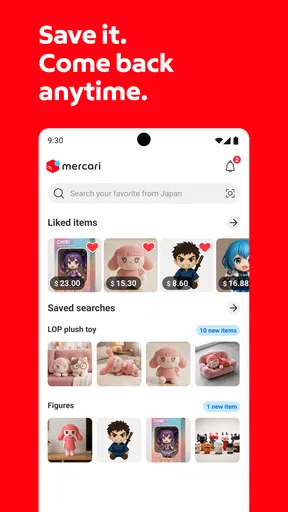
- Useful filters and saved searches help find specific collectibles.
- Many listings include detailed photos and item condition notes.
- Direct messaging lets buyers clarify details with sellers.
- Rare and discontinued merchandise can appear at reasonable prices.
Cons
- The Japanese-only marketplace can be difficult for international users.
- Shipping costs and proxy service fees may increase the final price.
- Item quality depends heavily on each individual seller.
- Popular collectibles may sell before you complete the purchase.
- Returns and refunds can be complicated for overseas buyers.
FAQs for Mercari Japan: Anime Shopping
What is Mercari Japan: Anime Shopping?
Mercari Japan is a marketplace app where users can buy and sell new and pre-owned items, including anime figures, manga, character goods, trading cards, cosplay products, games, and collectibles. The selection is largely supplied by individual sellers, so availability, prices, item condition, and product descriptions can vary considerably from one listing to another.
Can users outside Japan buy items through Mercari Japan?
International purchasing can be more complicated than using a regular global shopping app. Mercari Japan is primarily designed for the Japanese market, and many sellers ship only within Japan. Buyers abroad may need an approved proxy-shopping or forwarding service to purchase, pay for, and receive items. Before downloading, check current service availability, supported countries, fees, and shipping restrictions.
Are the anime products authentic and in good condition?
Mercari Japan contains both official merchandise and privately listed items, so authenticity and condition are not automatically guaranteed by the app itself. Carefully read the Japanese description, inspect every photograph, and review the seller’s ratings before buying. Look for details about scratches, missing accessories, altered packaging, smoke exposure, and whether an item is genuine, unofficial, or a prize figure.
How do payments, shipping, and additional fees work?
The total cost may include more than the listed item price. Depending on how you access the marketplace, you may need to pay domestic shipping, proxy or handling fees, international delivery, currency-conversion charges, taxes, and possible customs costs. Shipping methods also differ by seller and product size. Review the complete checkout estimate before confirming an order, especially for bulky figures or multiple purchases.
What should I know about returns, disputes, and seller communication?
Purchases on a second-hand marketplace are usually subject to stricter conditions than orders from a standard retail store. Read the listing carefully because cancellations and returns may be limited, particularly when an item matches its description. Check seller feedback, ask questions before purchasing when possible, and document the package when it arrives. If there is a serious problem, use the app or proxy service’s official dispute process promptly.


